About Robo Battle Arena
Continuous pressure changes everything
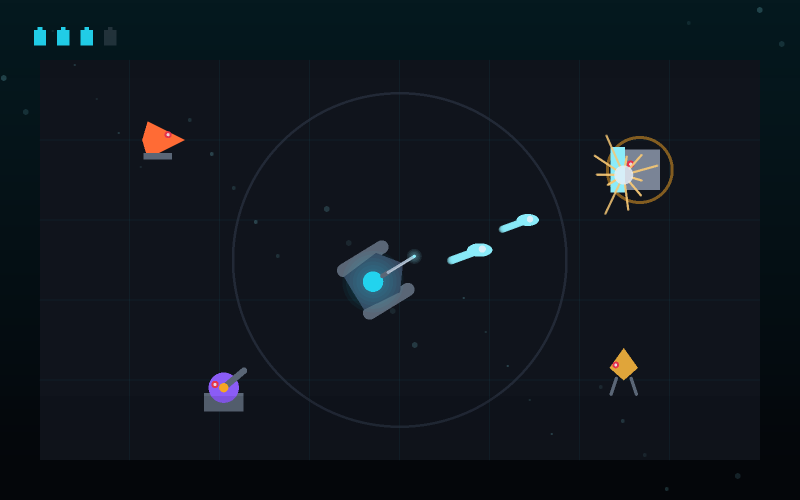
In a wave-based game there is a moment after the last enemy dies when you can breathe, reposition and plan. Robo Battle Arena deliberately removes that moment. Spawns are continuous, the rate rises over time, and there is never a point at which the arena is empty.
The consequence is that every second you spend fighting is a second more enemies are arriving. Killing things fast is not greed here, it is survival - but so is not getting hit, and the two pull against each other constantly. That tension is the game.
It also means you cannot clear your way out of a bad position. If you are surrounded, fighting through will not work, because the crowd is being replenished faster than you can reduce it. The only answer is to move.
Surges, and the choice between them
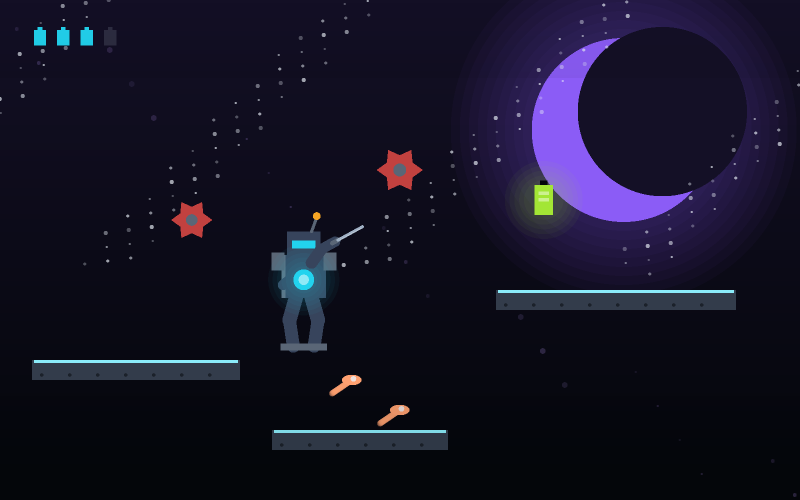
Every ninety seconds a surge arrives: a larger group with a heavier composition, announced a few seconds in advance. Surviving one offers a choice of two upgrades from a pool of four.
The upgrades are deliberately not stat increases. Faster power regeneration changes how aggressively you can play. A wider deflector cone changes how punishing being flanked is. A repair changes how many more mistakes you can afford. A slow field changes which fights you can take at all.
Because you only ever get two of four, runs diverge meaningfully. The regeneration and deflector build survives longer; the repair and slow field build scores higher per wave. Neither is correct, which is the point of offering the choice.
Kiting, and why the nearest enemy is usually wrong
Kiting means moving so that pursuers follow you in a line rather than surrounding you, and in a game with continuous spawns it is not a trick, it is the basic skill.
The technique is to move in a wide arc around the arena rather than in straight lines. Faster enemies catch up first and slower ones trail behind, so a mixed crowd naturally strings out by speed. You then fight the front of the line, which is one or two machines, instead of the whole crowd at once.
This also explains why shooting the nearest enemy is usually the wrong instinct. The nearest is generally the fastest, which means it is also the one that will still be near you in two seconds regardless. The dangerous machine is the one that will be in your escape path when you get there.
Scrap, and reading the results screen
Machines destroyed leave scrap, which is purely a score item and does not buy anything. It is counted separately on the results screen from your wave number, and the two together describe how a run actually went.
A high wave with low scrap means you survived by avoiding fights, which is legitimate and will eventually stall. High scrap at a low wave means you were killing efficiently but positioning badly. Most improvement comes from noticing which of those two patterns your runs fall into.
How to play
- Press Start, then move with WASD or the arrow keys and aim with the mouse.
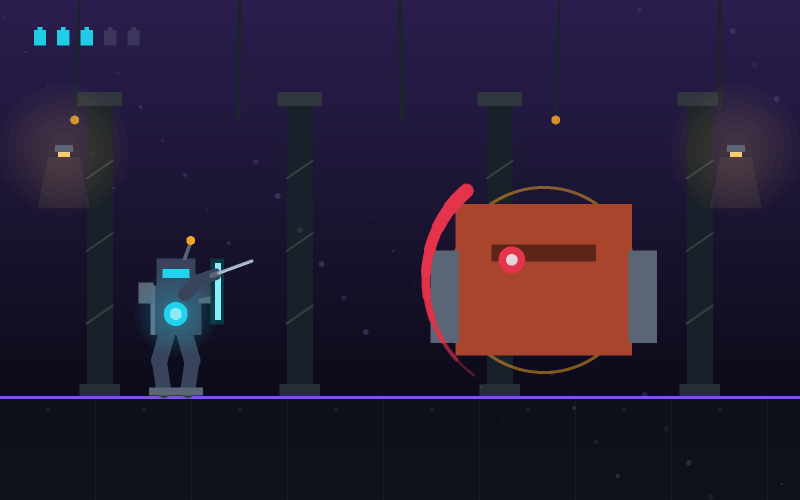
- Fire with the left mouse button, deflect with Shift, and boost with Space.
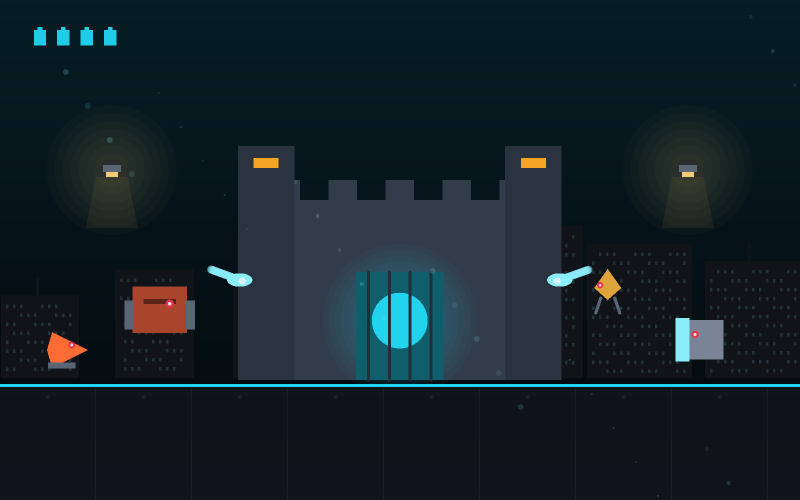
- Machines spawn continuously from the arena edges - there is no gap between waves.
- Survive a surge to choose two upgrades from four. Choose based on how your run is going, not a fixed plan.
- The run ends when your integrity reaches zero. Your best wave and scrap total are both recorded.
Controls
| Where | What to do |
|---|---|
| Move (desktop) | WASD or the arrow keys |
| Aim and fire | Mouse to aim, left button to fire |
| Deflect | Hold Shift, or the right mouse button |
| Boost | Space |
| Touch | Move pad on the left, fire and deflect buttons on the right |
| Pause | Escape or P |
Scoring
These are the point values this game awards, before the combo multiplier is applied where it uses one. Hit quality changes the figure: a strike at the centre of the correct moment is worth substantially more than one at the edge of it.
Tips
- Move in a wide arc, never in straight lines. A crowd that strings out by speed is a crowd you can fight.
- Shoot the enemy that will be in your escape path, not the one that is closest.
- You cannot fight your way out of being surrounded, because spawns replace losses faster than you can kill.
- Take the repair upgrade when integrity is low, even if a better long-term option is offered.
- Surges are announced several seconds early. Use that time to reach open ground.
- If your runs have high scrap and a low wave, the problem is positioning rather than aim.
Common mistakes
- Standing still to fight a group, which lets the rest of the arena converge on you.
- Treating the nearest machine as the most dangerous one.
- Picking upgrades to a fixed plan instead of to the state of the current run.
- Spending the surge warning killing stragglers instead of repositioning.
- Blocking rather than boosting when flanked - the deflector only covers the front.
Features
- Continuous spawning with no gaps, so pressure never fully lifts
- Surges every ninety seconds with a choice of two upgrades from four
- Upgrades that change decisions rather than adding flat damage
- Kiting-led design where positioning outweighs aim
- Separate wave and scrap records, so the results screen describes how a run went
- Best wave and best score both stored in your own browser
Game information
| Genre | Robot Battle - arena survival |
|---|---|
| Difficulty | Hard |
| Controls | WASD moves, mouse aims, Shift deflects, Space boosts |
| Recommended device | Best with a keyboard and mouse. Playable on touch, but the pace is demanding on a small screen. |
| Players | One player |
| Price | Free, with no account and nothing to unlock |
| Released | 19 March 2026 |
| Last updated | 14 August 2026 |