About robot battle games
Every attack has three phases
This is the single most important thing to understand about the battle games, and it applies to your attacks and to theirs equally. An attack has a wind-up, an active window and a recovery.
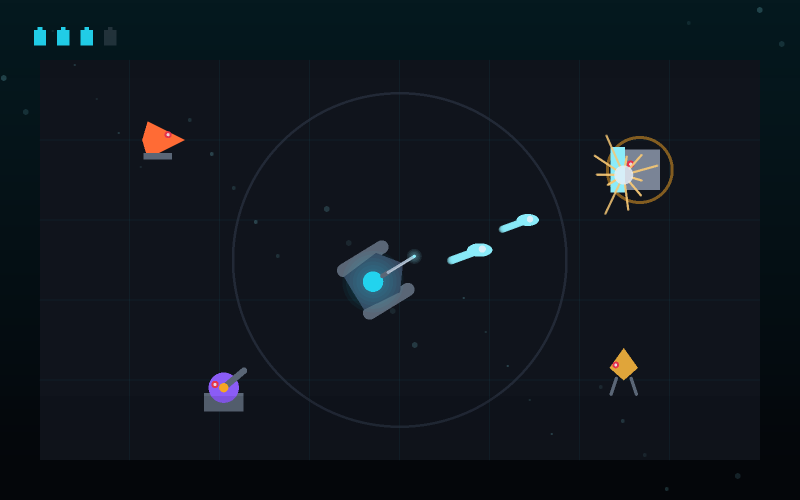
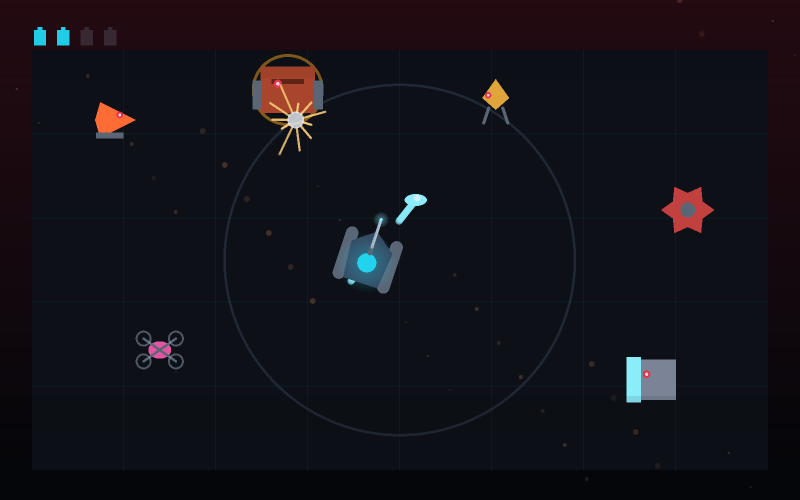
The wind-up is the telegraph. It is drawn as a ring closing around the enemy, amber for a normal attack and red for one that cannot be blocked. During the wind-up nothing can hurt you. The active window is the part that actually connects, and it is short - around a tenth of a second. The recovery is what happens afterwards, and during it the attacker cannot block, boost or attack again.
Almost every hit you land in these games will happen during an enemy's recovery. That is not a trick or an exploit, it is the intended shape of the fight. The machines are built to be beaten by patience.
Why attacking first usually loses
The most common mistake is attacking the moment you see an enemy move. That movement is the wind-up, and a light strike takes long enough that your own recovery frames land exactly when their attack becomes active. You will trade, and trading is bad for you because most enemies here out-damage you.
The habit worth building instead is to let the attack come, get out of its way or deflect it, and hit the recovery that follows. It feels slower and it is slower, but it is the difference between clearing three waves and clearing eight.
The exception is an enemy that is already staggered or mid-wind-up when your strike would land. Those count as open, they take double damage and they pay a significant score bonus. Learning to recognise an open target is most of what separates a good run from an average one.
Deflecting is a timing tool, not a stance
Holding the deflector down permanently does not work, and this is deliberate. A plate that was already up when a blow lands is a plain block: it absorbs the hit but costs a point of power every time, and when your power runs out the plate overloads and leaves you open for most of a second.
A plate raised inside a short window before the hit arrives is a deflect. Deflects cost no power, stagger the attacker for nearly a second, and pay the largest score bonus in the game. The window is generous enough to hit reliably once you are reacting to the telegraph rather than guessing.
The plate also only covers a cone in front of you. Being flanked while blocking is a real failure state, which is why positioning matters even in the games where you are not going anywhere.
Power is a decision, not a restriction
Strikes, deflects and boosts all draw from one shared power meter that refills after a short pause rather than continuously. Nothing stops you emptying it in a flurry. The game simply lets you, and then lets the machines do what machines do to something with no options left.
The habit worth building is keeping one point in reserve so a boost is always available. The habit worth breaking is treating a full meter as something to spend.
Tips for this category
- Watch for the amber ring, not the enemy's body. The ring is the only reliable telegraph and it is drawn identically on every machine in every game.
- A red ring means the attack cannot be deflected. Move out of the way instead - the plate will not save you.
- Never trade hits with a brute. Its damage is higher than yours and its recovery is long enough to punish for free.
- Keep one point of power in reserve at all times so a boost is always available.
- A staggered enemy takes double damage and pays a large bonus. Prioritise a staggered target over a nearer one.
- Back out of range rather than blocking when you can. Distance costs nothing and blocking costs power.