About mech & robot action games
Defence is a target-priority problem
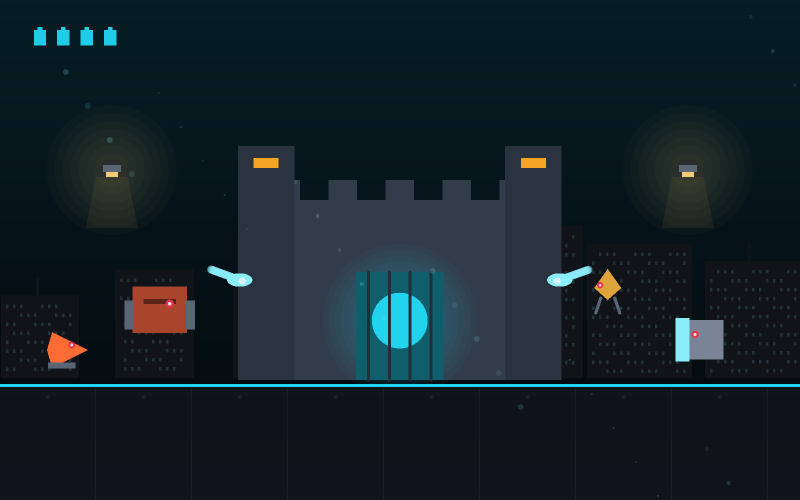
Cyber Robot Defense gives you a reactor core to protect and a stream of machines walking toward it. You can shoot them and you can spend salvage on upgrades between waves, but you cannot cover every approach at once, which is the actual game.
The instinct is to shoot whatever is nearest. That is usually wrong. The right target is the one that will reach the core first, which is not the same thing - a fast strider forty metres out arrives before a brute at twenty. Learning to read arrival time rather than distance is the single biggest improvement available in the game.
The second-biggest is knowing when to let something through. A single rusher reaching the core costs one point of integrity. Abandoning your position to stop it can cost three. Defence games reward triage, and triage means accepting losses you could technically have prevented.
Boss fights are a memory test, not a reflex test
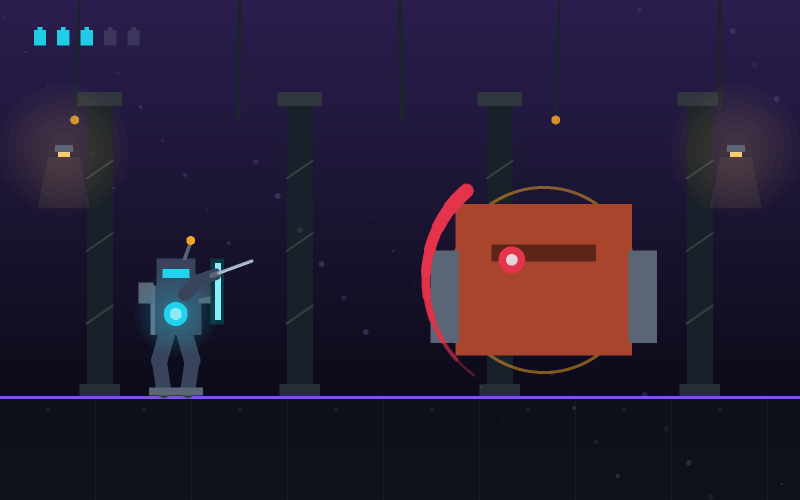
Mech Boss Challenge is one machine with a fixed set of attacks. It never improvises. Every pattern it has is one you can see coming, and the fight is long enough that you will see each pattern several times.
That changes what practice means. The first two attempts are reconnaissance - you are not really trying to win, you are learning what the four patterns look like and which parts of the arena each one makes unsafe. By the third attempt you should be losing to execution rather than to surprise, and that is the point where progress becomes fast.
The boss also has openings that only exist after specific attacks. Its heavy slam leaves it planted for nearly a second; its sweep does not. Attacking after the wrong one is how most attempts end, and it is why the fight rewards knowing the pattern names rather than just dodging well.
Upgrades that change decisions, not numbers
The upgrades in Cyber Robot Defense are deliberately few and deliberately different from each other. Nothing in the list is simply a bigger number. Faster reload changes how aggressively you can hold a lane; a repair changes how many mistakes you can still afford; a slow field changes which targets are worth shooting at all.
This is on purpose. An upgrade tree full of incremental damage increases turns a defence game into an arithmetic exercise where the correct choice is always the same. Four options that each change how you play keep the decision alive on every run.
Longer runs, and what that costs
These are the longest games on the site. A full defence run is around five minutes and a boss attempt can reach four. That is still short by most standards, but it is long enough that a mistake in the third minute is genuinely annoying in a way that a mistake in a forty-second arcade run is not.
Both games therefore have a pause that is a real pause, and both save your best result rather than your last one. If you need to stop, stop.
Tips for this category
- In Cyber Robot Defense, shoot the target that will arrive first, not the one that is closest.
- Letting one weak machine through is often cheaper than leaving your position to stop it.
- Spend salvage between waves rather than saving it. A wave you barely survive is worth less than an upgrade you used.
- Against the boss, spend your first two attempts learning the four patterns rather than trying to win.
- Only attack after the boss's slam. Its sweep recovers fast enough to catch you mid-strike.
- Both games are long enough to be worth pausing. Use it rather than finishing a run badly.