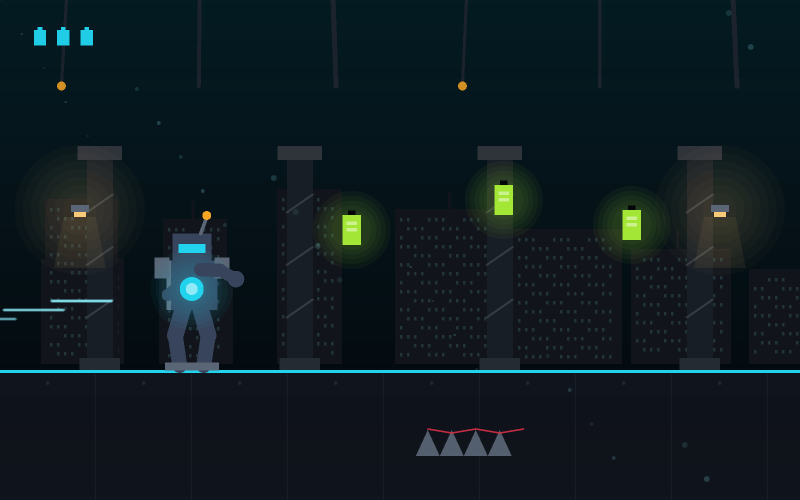
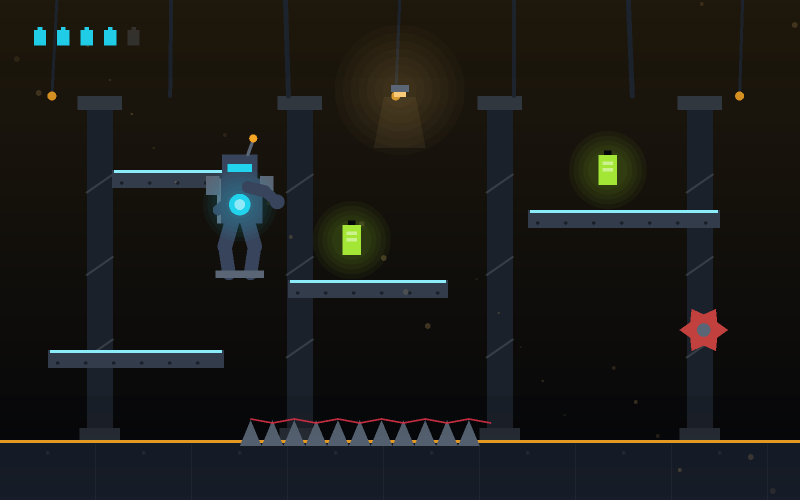
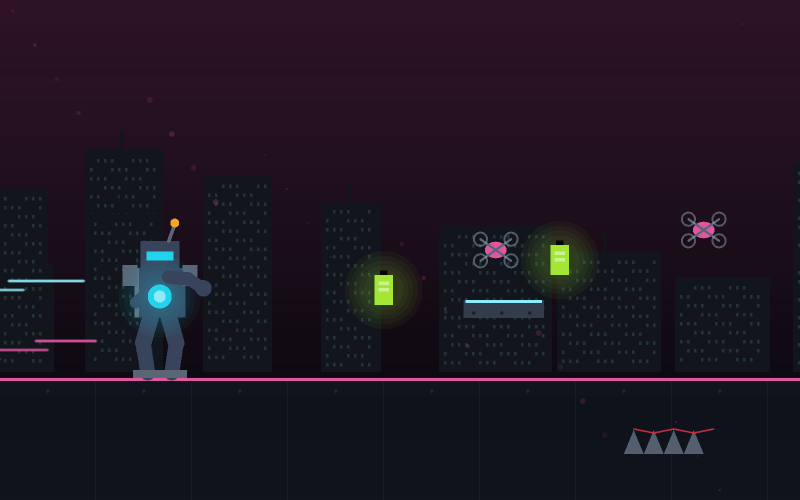
About Robot Factory Sorter
Mistakes cost more than hesitation
This is the rule the whole game is built around and it is the opposite of almost everything else on Robot Arcade. A component you route slowly still scores. A component you route incorrectly costs you one of three strikes and breaks your accuracy streak.
That inversion changes how you should play. When you are not sure where something goes, the correct move is to slow down and look, not to guess and move on. The belt will back up slightly and you will lose a little time, which is a much smaller penalty than a strike.
It also means the reject chute is a real option rather than an admission of failure. Sending a component you cannot identify down the chute costs a small score penalty and nothing else. Guessing costs a strike one time in three.
Reading components by silhouette
Each component type has a distinct outline: rounded cores, angular plates, and spooled coils. Colour reinforces the distinction but never carries it alone, which means the game is playable if you cannot easily distinguish the colours used.
At low speed you have time to look at the detail. At high speed you do not, and the silhouette is what you will actually be reading. Practising by deliberately looking at outlines rather than colours early in a run pays off considerably later in one.
Damaged components appear from about the halfway point. They carry a visible crack and belong in the reject chute regardless of what type they otherwise look like. They are the single most common cause of a broken accuracy streak, because the eye reads the type first and the damage second.
The quota, and why accuracy is the score
Points come from components sorted correctly, but the number that actually moves your score is the accuracy percentage, which multiplies everything at the end of the run.
A run that sorts ninety components at 98% accuracy comfortably beats a run that sorts a hundred and thirty at 80%. This is stated plainly on the results screen because it is not obvious while playing, and because the natural instinct in a game with a speeding conveyor is to go faster.
Three mistakes end the run. The quota bar in the HUD shows how close you are to the accuracy threshold for the next speed tier - dropping below it holds the belt at its current speed, which is a mercy rather than a punishment.
How to play
- Press Start. Components travel from the left along the conveyor toward the sorting head.
- Press Left, Right, or Up to send the component to the lower, upper, or middle bay - or 1, 2 and 3.
- Press Down to send a component to the reject chute. Use it for damaged parts and for anything you cannot identify.
- Each component must reach the bay matching its silhouette. Damaged components always go to reject.
- Three incorrect sorts end the run. Press Restart or R to go again.
Controls
| Where | What to do |
|---|---|
| Route to bay (desktop) | Left, Up and Right arrows, or 1, 2 and 3 |
| Reject | Down arrow or 4 |
| Route (mobile) | The four labelled bay buttons under the game |
| Pause | Escape or P |
| Restart | R, or the Restart button |
Scoring
These are the point values this game awards, before the combo multiplier is applied where it uses one. Hit quality changes the figure: a strike at the centre of the correct moment is worth substantially more than one at the edge of it.
Tips
- When unsure, reject. A small score penalty is always cheaper than a one-in-three chance of a strike.
- Read the silhouette, not the colour. At high belt speed the outline is all you will actually see.
- Check for the crack before you check the type. Damaged parts are the most common cause of a broken streak.
- Accuracy multiplies your final score. Ninety components at 98% beats a hundred and thirty at 80%.
- If the belt is backing up, let it. A short queue costs nothing and gives you time to look.
- Slowing below the accuracy quota holds the belt speed rather than raising it, which is often the better run.
Common mistakes
- Guessing on an unfamiliar component instead of using the reject chute.
- Sorting by colour, which stops working as soon as the belt speeds up.
- Missing the crack on a damaged part because the component type was read first.
- Racing the belt when the score is driven by accuracy rather than throughput.
- Panicking when parts queue up - the queue itself carries no penalty at all.
Features
- Three component types with distinct silhouettes, so colour is never the only cue
- A reject chute that makes 'I don't know' a valid and cheap answer
- Damaged parts that override type, rewarding careful looking over pattern matching
- Accuracy multiplier applied to the final score, stated plainly on the results screen
- Speed tiers gated behind an accuracy quota rather than time survived
- Four large touch targets, sized for thumbs rather than cursors
Game information
| Genre | Robot Arcade - sorting and reaction arcade |
|---|---|
| Difficulty | Medium |
| Controls | Left/Right or 1-3 to route, Down to reject |
| Recommended device | Anything. Works well on a phone; the three-lane layout was designed for thumbs. |
| Players | One player |
| Price | Free, with no account and nothing to unlock |
| Released | 18 April 2026 |
| Last updated | 6 August 2026 |